Gallery
| Location | 3* Class | 4* Class | 5* Class |
|---|---|---|---|
| HANOI | Skylark Hotel | Thang Long Opera Hotel | Sheraton Hotel |
| HOCHIMINH CITY | Elios Hotel | Bay Saigon | Rex Hotel |
| HALONG CRUISE | Lavender Cruise | Syrena Cruise | Athena Cruise |
| HOI AN | Phohoi Reverside Resort | Vinh Hung Resort | Palm Garden Resort |
(Tour Duration: 4days 3nights)
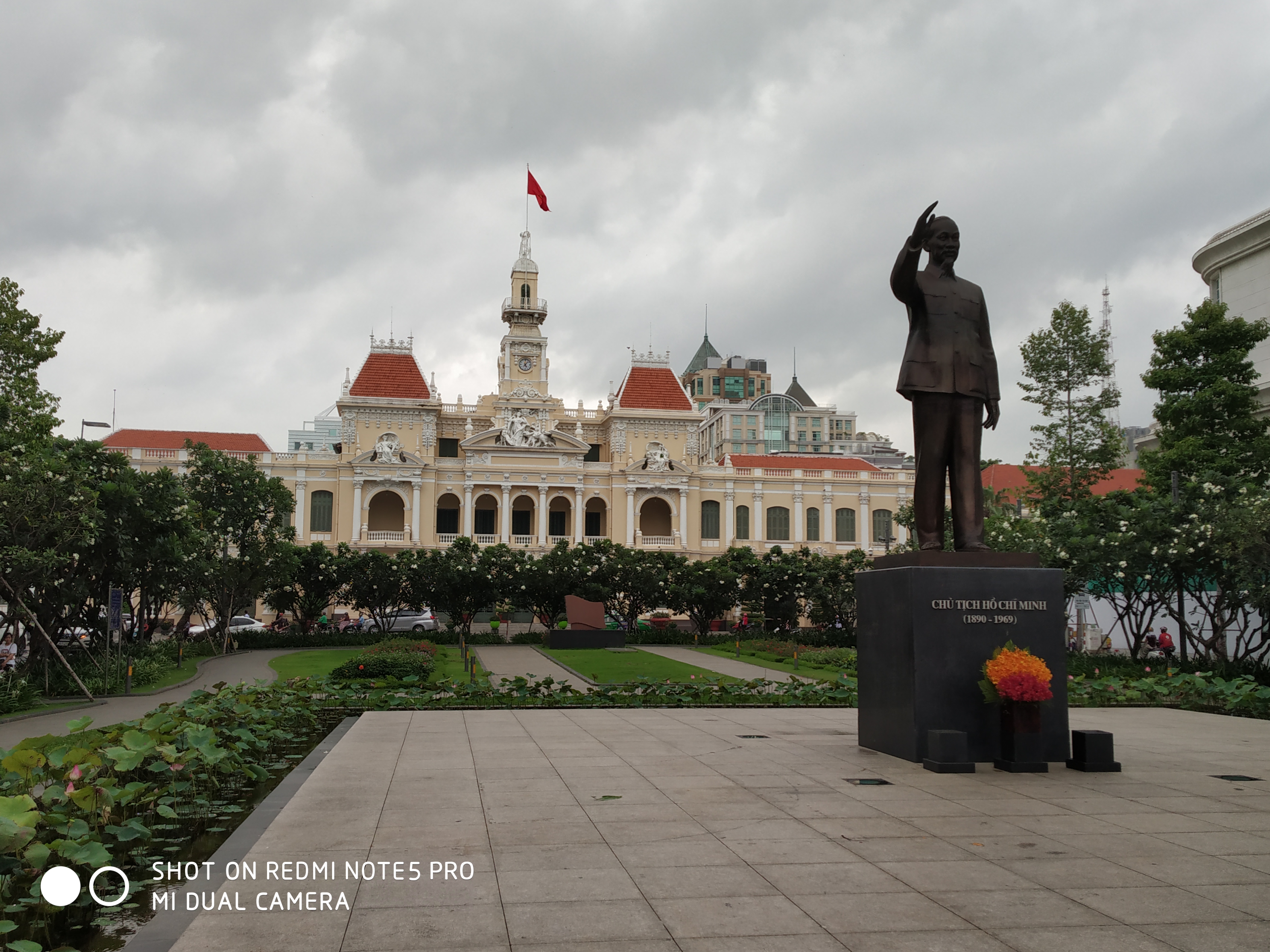
Our guide will meet you at Noi Bai airport and escort you to hotel for checking in (check in time at 2pm). Afternoon, we visit Hanoi city tour to Ho Chi Minh mausoleum area with outside photo Parliament House, President Palace; visit Tran Quoc Pagoda – one of nicest Pagoda in Hanoi, then go to Hoan Kiem lake– the heart of Hanoi city & Walk in Old quarter.Overnight in hotel in Hanoi.
We pick you up from your hotel for 3.5 hour driving North East; the bus ride will take you
over the Red River and through the country side of our second biggest delta to reach Halong
Bay. You would be first dropped off at the harbor of Halong’s embark on cruise, welcome
drinks & check in your room. Your lunch, at the boat’s restaurant, is would be served with
fresh local seafood, but vegetable menu is always available at your request.
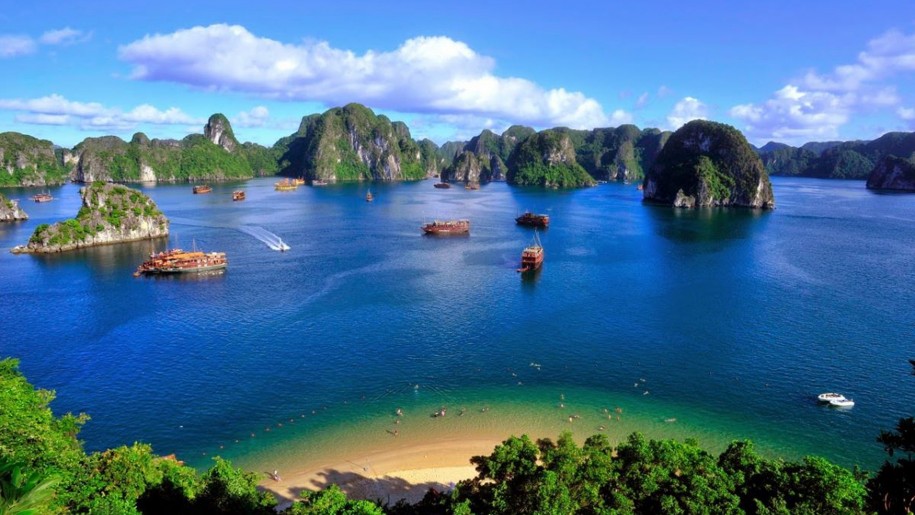
From the marina area, our cruiser passes by Dog Head and Swan Islands, Ba Hang Floating
villages (with floating houses), Incense Burner then Thumb Islands before reaching
Surprising (Sung Sot) Cave. At around 15h00, our boat will anchored for a short tender ride
from the middle of the bay to an island for your visit to famous Sung Sot Cave. As the sun
sets over the bay, we head back to our cruise and relax. Coffee, tea and fruits will be
available on the sundeck or you can order your favorite drink from our bar. Dinner would be
served with typically local seafood, you are then free to either drink or experience squid
fishing before heading to your bed.
Note: Cruise program may be difference between cruises
Lunch and Dinner on Cruise with International Food
You would love to rise a bit early for a breath taking , the stunning vista
of the serene bay is always best experience of staying overnight on boat. We serve you
buffet breakfast from 7h30, then we have time to gear up to visit around Luom Bo area
(provincial border between Quang Ninh province and Cat Ba National Park of Hai Phong). On
the cruising way back, we cruise on a different way so that you can see new areas and
viewing islands from a different side
At around 09h00, we arrange a cooking demonstration on boat to show you how to make real
Vietnamese spring rolls, just before lunch time: you will learn recipes and techniques that
go into the most popular dish of the Vietnamese food. Lunch would be served on boat when you
are close to the harbor. Disembark at 11.00 am & Our bus is already waiting for you at the
marina to take you back to Hanoi, we leave Halong Bay and reach to Hanoi around 16h30.
Overnight in Hanoi
Note: Cruise program may be difference between cruises
Breakfast and Brunch on Cruise
Free time for shopping before transfer to Noi Bai airport for departure.
Prices included:
Vietnam Visa Approval Letter (for Indian Passport Holders)Price Excluded:
Vietnam Visa stamp fee is US$25 ( Tourist pay at airport)(Tour Duration: 5days – 4nights)
Our guide will meet you at Noi Bai airport and escort you to hotel for checking in (check in time at 2pm). Afternoon, we visit Hanoi city tour to Ho Chi Minh mausoleum area with outside photo Parliament House, President Palace; visit Tran Quoc Pagoda – one of nicest Pagoda in Hanoi, then go to Hoan Kiem lake – the heart of Hanoi city & Walk in Old quarter.Overnight in hotel in Hanoi.
Breakfast at hote. Pick up from your hotel & depart to Ninh Binh .Arrive at Hoa Lu - the
ancient capital of Vietnam in the 10th century, visit the temple of King Dinh. Under the
introduction of our local guide, you will get to know more about the Vietnamese history. Hoa
Lu existed as the capital of Vietnam for 41 years (968 – 1009), of which 12 years was under
the Dinh dynasty – King Dinh Tien Hoang when country named Dai Co Viet.
Afternoon, continue the journey of discovery Tam Coc- the “Halong Bay on land” 13.30 Visit
Tam Coc by a small boat rowed by a local for about 2 hours. Known as “Halong Bay on land”,
Tam Coc is the name of the limestone caves area stretching along Ngo Dong river. The boat
trip is a nice journey along the river with the peaceful scenery of Limestone Mountains,
rice paddy and the sight of some temples along the way. If traveling during harvest season,
you may have chances to see the yellow rice carpet along the river banks. Leave Tam Coc and
drive straight back to Hanoi. Overnight in Hanoi.
We pick you up from your hotel for 3.5 hour driving North East; the bus
ride will take you over the Red River and through the country side of our second biggest
delta to reach Halong Bay. You would be first dropped off at the harbor of Halong’s embark
on cruise, welcome drinks & check in your room. Your lunch, at the boat’s restaurant, is
would be served with fresh local seafood, but vegetable menu is always available at your
request.
From the marina area, our cruiser passes by Dog Head and Swan Islands, Ba Hang Floating
villages (with floating houses), Incense Burner then Thumb Islands before reaching
Surprising (Sung Sot) Cave. At around 15h00, our boat will anchored for a short tender ride
from the middle of the bay to an island for your visit to famous Sung Sot Cave. As the sun
sets over the bay, we head back to our cruise and relax. Coffee, tea and fruits will be
available on the sundeck or you can order your favorite drink from our bar. Dinner would be
served with typically local seafood, you are then free to either drink or experience squid
fishing before heading to your bed.
Note: Cruise program may be difference between cruises
Lunch and Dinner on Cruise with International Food
You would love to rise a bit early for a breath taking , the stunning vista
of the serene bay is always best experience of staying overnight on boat. We serve you
buffet breakfast from 7h30, then we have time to gear up to visit around Luom Bo area
(provincial border between Quang Ninh province and Cat Ba National Park of Hai Phong). On
the cruising way back, we cruise on a different way so that you can see new areas and
viewing islands from a different side.
At around 09h00, we arrange a cooking demonstration on boat to show you how to make real
Vietnamese spring rolls, just before lunch time: you will learn recipes and techniques that
go into the most popular dish of the Vietnamese food. Lunch would be served on boat when you
are close to the harbor. Disembark at 11.00 am & Our bus is already waiting for you at the
marina to take you back to Hanoi. Overnight in Hanoi.
Note : Cruise program may be difference between cruises
: Breakfast and Brunch on Cruise
Free time for shopping before transfer To Noi Bai airport for departure.
Prices included:
Price Excluded:
(Tour Duration: 4days 3nights)
Arrive in Saigon. Greeted at the airport and transferred to the city centre
& check in hotel (check in time from 2pm on ward). Afternoon, visit The Reunification
Palace: This is one of the most important buildings in the city; War Remnants Museum:
Formerly known as the Museum of American War Crimes, this is a poignant display of the
futility of war; Notre Dame Cathedral and Old Post Office: Built between 1877 and 1883 this
is one of the best examples of classical French colonial architecture.
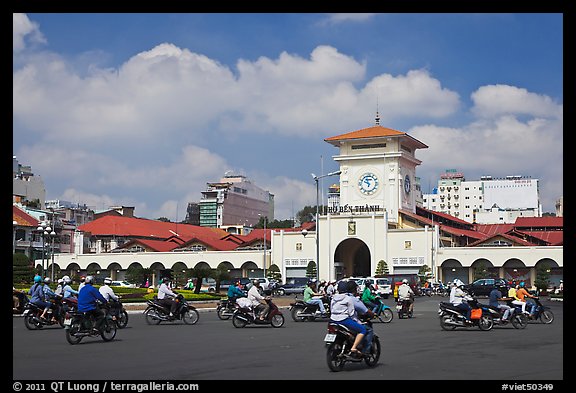
Ben Thanh Market: This bustling market is very popular with tourists, primarily due to its
central location. It has a wide selection of goods ranging from fake Nike shoes to beautiful
silk Ao Dais. Overnight in Saigon.
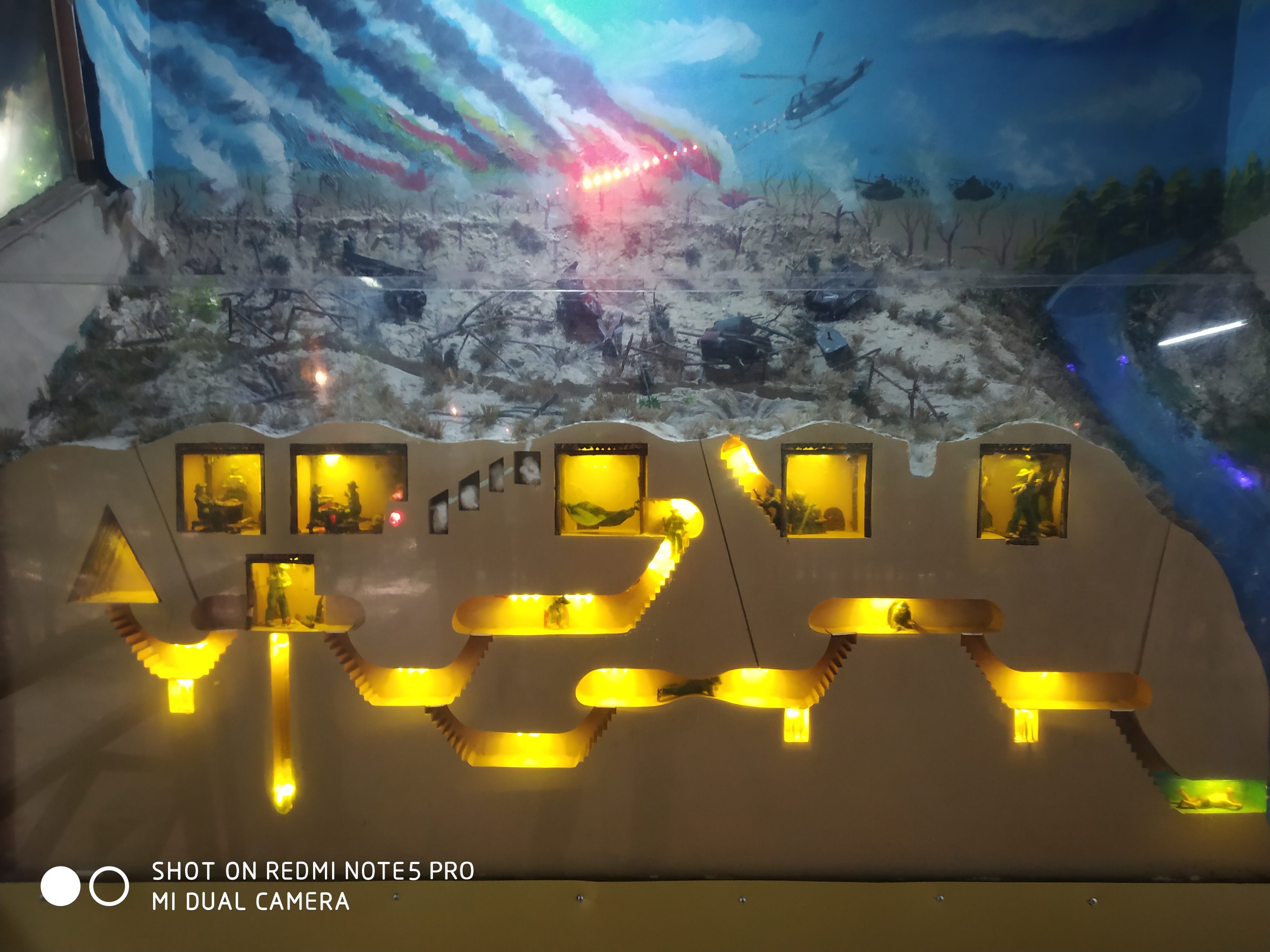
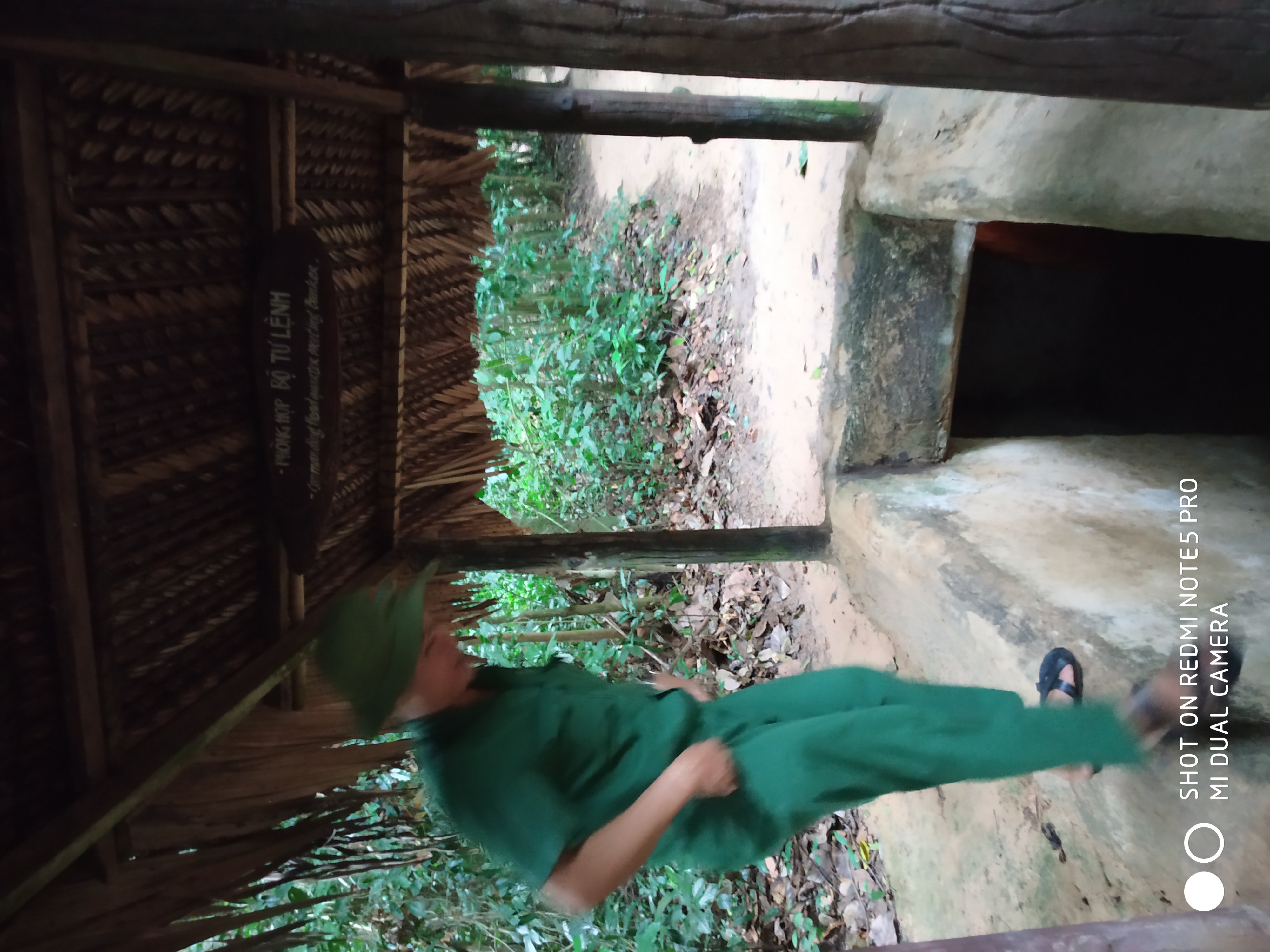
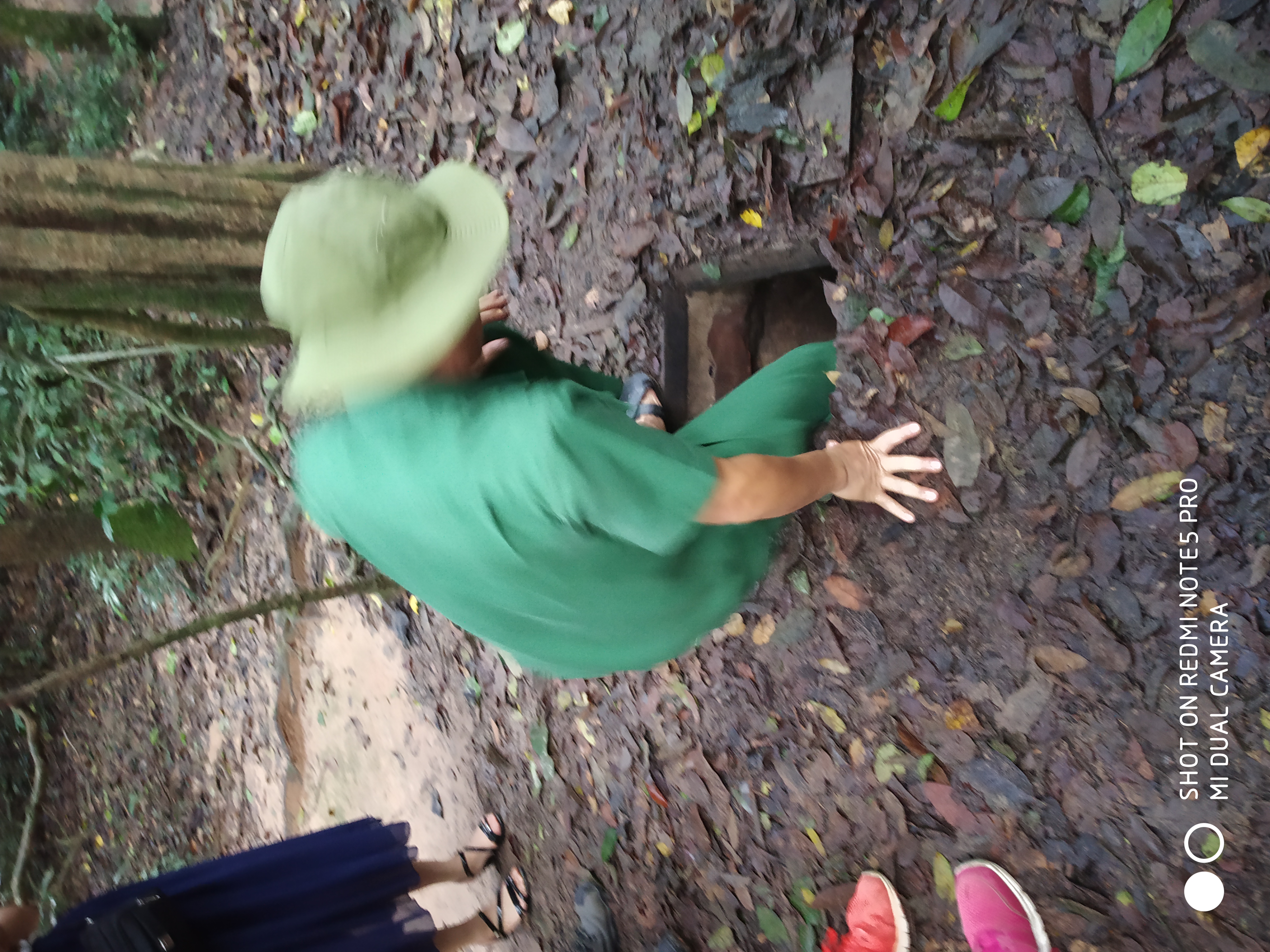
Morning visit Cu Chi tunnel, an incredible underground network constructed by Vietnamese guerrillas to protect the region against the American attacks during the Vietnam War. We can even crawl a part inside the tunnel, visit their infirmary, kitchen.... to discover how people had survived hereby. Back to Saigon. Overnight in Saigon.
Drive to My Tho, known as the "bigger rice basket" in Vietnam. Upon arrival Cruising through Mekong River, passing a fishing villages. Visiting some small islets as Turtle, Dragon, Phoenix Island,.. under a green canopy of water coconut trees. Walking through some villages to a fruit garden. Taste tropical fruits, while having live traditional music. Have honey tea. Short rowing boat ride. Back to Saigon . Overnight in Saigon Hotel
Free time for shopping before transfer to Tan Son Nhat airport for departure.
Prices included:
Price Excluded:
(Tour Duration: 8Days 7Nights)
Our guide will meet you at Noi Bai airport and escort you to hotel for checking in (check in time at 2pm). Afternoon, we visit Hanoi city tour to Ho Chi Minh mausoleum area with outside photo Parliament House, President Palace; visit Tran Quoc Pagoda – one of nicest Pagoda in Hanoi, then go to Hoan Kiem lake– the heart of Hanoi city & Walk in Old quarter.
Overnight in hotel in Hanoi.
We pick you up from your hotel for 3.5 hour driving North East; the bus ride will take you over the Red River and through the country side of our second biggest delta to reach Halong Bay. You would be first dropped off at the harbor of Halong’s embark on cruise, welcome drinks & check in your room. Your lunch, at the boat’s restaurant, is would be served with fresh local seafood, but vegetable menu is always available at your request.
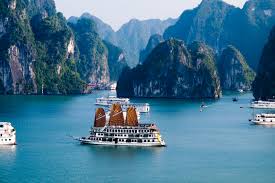
From the marina area, our cruiser passes by Dog Head and Swan Islands, Ba Hang Floating villages (with floating houses), Incense Burner then Thumb Islands before reaching Surprising (Sung Sot) Cave. At around 15h00, our boat will anchored for a short tender ride from the middle of the bay to an island for your visit to famous Sung Sot Cave. As the sun sets over the bay, we head back to our cruise and relax. Coffee, tea and fruits will be available on the sundeck or you can order your favorite drink from our bar. Dinner would be served with typically local seafood, you are then free to either drink or experience squid fishing before heading to your bed.
Note: Cruise program may be difference between cruises
Lunch and Dinner on Cruise with International Food
You would love to rise a bit early for a breath taking , the stunning vista of the serene bay is always best experience of staying overnight on boat. We serve you buffet breakfast from 7h30, then we have time to gear up to visit around Luom Bo area (provincial border between Quang Ninh province and Cat Ba National Park of Hai Phong). On the cruising way back, we cruise on a different way so that you can see new areas and viewing islands from a different side
At around 09h00, we arrange a cooking demonstration on boat to show you how to make real Vietnamese spring rolls, just before lunch time: you will learn recipes and techniques that go into the most popular dish of the Vietnamese food. Lunch would be served on boat when you are close to the harbor. Disembark at 11.00 am & Our bus is already waiting for you at the marina to take you back to Hanoi. Transfer to airport and take flight to Danang. Arrival Danang, continue to Transfer to Hoi An. Overnight in Hoi An.
Note: Cruise program may be difference between cruises
: Breakfast and Brunch on Cruise
Airfare is not included
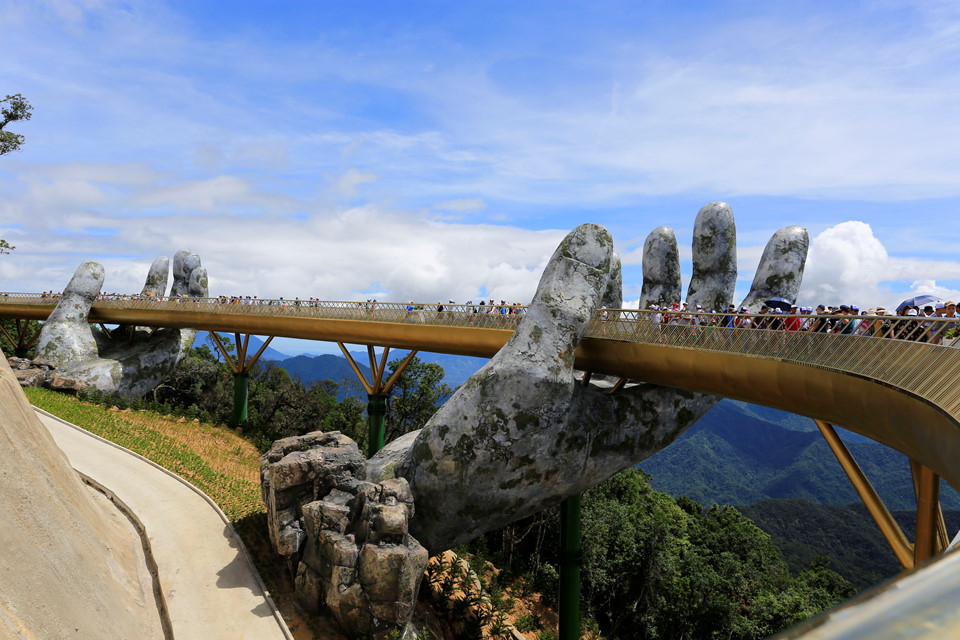
Morning , Transfer to Ba Na hills and take Cable Car which gains 5 world scores to Ba Na hills station. Stop at By Night station to visit Vong Nguyet hills, Linh Ung pagoda, The Old Villas of French. Continue moving up by cable car to the Nui Chua Mountain – the top of Ba Na range, visiting Nginh Phong top, Le Nim Villas, Orchid Garden… Experience hill climbing train (first and unique funicular in Vietnam) and visit an old French cellar (Debay Ancient Wine Cellar), flower garden Le Jardin D’amour and Linh Ung Pagoda. Visiting Cau Vang (means “Golden Bridge”) with the special structure in the hills.
Late afternoon, transfer back to Hoi An. Arriving to Hoian ancient town, you will check in the hotel. Free at leisure and overnight in Hoian.
Pick up by our tour guide and driver at 8.00AM from your hotel, we will spend a haft day for visiting Hoian ancient town. By walking over the tile-roofed Japanese Bridge, visit taciturn Chinese Assembly Halls and Trading Houses, Pagodas, and stroll around the market located by Thu Bon river, you may find out the same feelings of the artists, who see the charm of Hoi An a magical old world of Oriental feel and source of inspiration. In the afternoon, taking a boat trip on Thu Bon River. You could visit the living of the local people and feeling the fresh air. Overnight in Hoi An.
Morning ,transfer to Danang airport and take flight to Saigon. Arrive in Saigon. Greeted at the airport and tranferred to the city centre to checkin hotel.
Visiting The Reunification Palace: This is one of the most important buildings in the city; War Remnants Museum: Formerly known as the Museum of American War Crimes, this is a poignant display of the futility of war; Notre Dame Cathedral and Old Post Office: Built between 1877 and 1883 this is one of the best examples of classical French colonial architecture.
Ben Thanh Market: This bustling market is very popular with tourists, primarily due to its central location. It has a wide selection of goods ranging from fake Nike shoes to beautiful silk Ao Dais. Overnight in Saigon.
Note: Airfare is not included.
Drive to My Tho, known as the "bigger rice basket" in Vietnam. Upon arrival Cruising through Mekong River, passing a fishing villages. Visiting some small islets as Turtle, Dragon, Phoenix Island,.. under a green canopy of water coconut trees. Walking through some villages to a fruit garden. Taste tropical fruits, while having live traditional music. Have honey tea. Short rowing boat ride. Back to Saigon. Overnight in Saigon.
Morning, we will drive overland to Cu Chi Tunnels, an incredible underground network constructed by Vietnamese guerrillas to protect the region against the American attacks during the Vietnam War. We can even crawl a part inside the tunnel, visit their infirmary, kitchen.... to discover how people had survived hereby. Back to Hochiminh city and free for shopping. Overnight in Hochiminh city
Free time at leisure before transfer to Tan Son Nhat airport for departure.
Prices included:
Price Excluded:
Official name: The Socialist Republic of Vietnam (Cộng hòa Xã hội Chủ nghĩa Việt Nam) Mainland
Territory: 331,211.6 sq. km Population: 85 million inhabitants National Capital: Hanoi Vietnam is
the easternmost country on the Indochina Peninsula in Southeast Asia. Vietnam is a strip of land
shaped like the letter “S”. It is bordered by China to the north, Laos to the northwest, and
Cambodia to the southwest. On the country's east coast lies the South China Sea. The country’s total
length from north to south is 1,650km. Its width, stretching from east to west, is 600km at the
widest point in the north, 400km in the south, and 50km at the narrowest part, in the centre, in
Quang Binh Province. The coastline is 3,260km long and the inland border is 4,510km. Latitude: 102º
08' - 109º 28' east Longitude: 8º 02' - 23º 23' north Vietnam is also a transport junction from the
Indian Ocean to the Pacific Ocean.
CLIMATE : Vietnam is located in both a tropical and a temperate zone. There are two
major climate regions in Vietnam. Northern Vietnam (from Hai Van Pass toward to the north) has a
highly-humid tropical monsoon climate with four distinguishable seasons (spring, summer, autumn and
winter) and is influenced by the Northeast and Southeast monsoon. Southern Vietnam (from Hai Van
pass to Ha Tien) has a rather moderate tropical climate given the weak influence of monsoon and is
characterized by dry and rainy seasons and warm weather all year round.
The average temperature in Vietnam varies between 21°C and 27°C and increases from the North to the
South. Every year there are 100 rainy days and the average rainfall is 1,500 to 2,000mm. The
humidity ranges around 80%. The sunny hours are 1,500 to 2,000 and the average solar radiation of
100kcal/cm2 in a year. Air humidity is 80%.
HISTORY OF VIETNAM
: The history of Vietnam, according to legends, dates back more than 4,000 years. The
only reliable sources, however, indicate that Vietnamese history roughly dates to 2,700 years ago.
For most of the period from 111 BC to the early 10th century, it was under the direct rule of
successive dynasties from China. Vietnam regained autonomy in early 10th century and complete
independence in 938 AD. While for much of its history, Vietnam remained a tributary state to its
larger neighbor China, it repelled repeated attempts by China to make it once again part of the
territory under direct imperial rule. Moreover, it managed to repel the three invasions by the
Mongols during the Yuan Dynasty, when China was under Mongolian rule. But the king at that time,
Trần Nhân Tông, would eventually diplomatically submit as a tributary of the Yuan to avoid further
conflicts. The independent period temporarily ended in the middle to late 19th century, when the
country was colonized by France. During World War II, Imperial Japan expelled the French to occupy
Vietnam, though they retained French administrators during their occupation. After the war, France
attempted to re-establish its colonial rule but ultimately failed. The Geneva Accords partitioned
the country in two with a promise of democratic election to reunite the country.
However, rather than peaceful reunification, partition led to the Vietnam War - which, depending on
one's perspective, was either a civil war or another battlefield of the then-ongoing global
ideological conflict, the Cold War. During this time, the North was supported by the People's
Republic of China and the Soviet Union, while the South was supported by the United States. After
millions of Vietnamese deaths and the American withdrawal from Vietnam in March 1973, the war ended
with the fall of Saigon to the North in April 1975. In 1986, the Communist Party of Vietnam changed
its economic policy and began reforms of the private sector similar to those in China. Since the
mid-1980s, Vietnam has enjoyed substantial economic growth.
VIETNAMESE CULTURE
: The richness of Vietnam's origins is evident throughout its culture. Spiritual life
in Vietnam is a grand panoply of belief systems, including Confucianism, Taoism, Buddhism,
Christianity, and Tam Giao (literally 'triple religion'), which is a blend of Taoism, popular
Chinese beliefs, and ancient Vietnamese animism.
The most important festival of the year is Tet, a week-long event in late January or early February
that heralds the new lunar year and the advent of spring. Celebration consists of both raucous
festivity (fireworks, drums, gongs) and quiet meditation. In addition to Tet, there are about twenty
other traditional and religious festivals each year.
Vietnamese architecture expresses a graceful aesthetic of natural balance and harmony that is
evident in any of the country's vast numbers of historic temples and monasteries. The pre-eminent
architectural form is the pagoda, a tower comprised of a series of stepped pyramidal structures and
frequently adorned with lavish carvings and painted ornamentation. Generally speaking, the pagoda
form symbolizes the human desire to bridge the gap between the constraints of earthly existence and
the perfection of heavenly forces. Pagodas are found in every province of Vietnam.
As a language, Vietnamese is exceptionally flexible and lyrical, and poetry plays a strong role in
both literature and the performing arts. Folk art, which flourished before French colonization, has
experienced resurgence in beautiful woodcuts, village painting, and block printing. Vietnamese
lacquer art, another traditional medium, is commonly held to be the most original and sophisticated
in the world. Music, dance, and puppetry, including the uniquely Vietnamese water puppetry, are also
mainstays of the country's culture.
Although rice is the foundation of the Vietnamese diet, the country's cuisine is anything but bland.
Deeply influenced by the national cuisines of France, China, and Thailand, Vietnamese cooking is
highly innovative and makes extensive use of fresh herbs, including lemon grass, basil, coriander,
parsley, laksa leaf, lime, and chili. Soup is served at almost every meal, and snacks include spring
rolls and rice pancakes. The national condiment is nuoc mam, a piquant fermented fish sauce served
with every meal. Indigenous tropical fruits include bananas, pineapples, coconuts, lychees, melons,
mandarin oranges, grapes, and exotic varieties like the three-seeded cherry and the green dragon
fruit.
VIETNAMESE PEOPLE
: The people of Vietnam have a unique and fascinating culture that has been shaped by
thousands of years of history. Vietnamese culture has been influenced by many other civilizations:
the ancient peoples that once inhabited the land, the Chinese, the French, and most recently, the
Americans and Russians. From all these outside influences, and centuries of war, oppression, and
hardship, they have formed, and maintained their culture. The people of Vietnam are hard working and
feel strong ties to their families. They are well versed in the arts, and have made several
contributions to the world of literature. Aside from their painful history, the Vietnamese people
have a culture and many customs, all their own.
Vietnam is a multi-nationality country with 54 ethnic groups. The Viet (Kinh) people account for 87%
of the country’s population and mainly inhabit the Red River delta, the central coastal delta, the
Mekong delta and major cities. The other 53 ethnic minority groups, totaling over 8 million people,
are scattered over mountain areas (covering two-thirds of the country’s territory) spreading from
the North to the South.
VILLAGES – GUILDS
: The Vietnamese culture has always evolved on the basis of the wet rice civilization.
Thus, the lifestyle of the Vietnamese population is closely related to its village and native lands.
LANGUAGE :
Vietnamese is the national and official language of Vietnam. It is the mother tongue of the
Vietnamese people (người Việt or người Kinh), who constitute 86% of Vietnam's population.
RELIGION AND BELIEF
:
With its many cultures, Vietnam has a variety of religions. Originally, Vietnam's three main
religions were Taoism, Mahayana Buddhism and Confucianism, Buddhism being introduced first. Although
Buddhism and Taoism were popular with the people, Confucianism became the recognized religion.
Buddhism was first introduced to Vietnam in the 2nd century, and reached its peak in the Ly dynasty
(11th century). Presently, over 70 percent of the population of Vietnam are either Buddhist or
strongly influenced by Buddhist practices.
Catholicism was introduced to Vietnam in the 17th century. About 10 percent of the population is
considered Catholic.
Protestantism was introduced to Vietnam at about the same time as Catholicism. Protestantism,
however, remains an obscure religion. At present most Protestants live in the Central Highlands. The
number of Protestants living in Vietnam is estimated at 400,000.
Islamic followers in Vietnam are primarily from the Cham ethnic minority group living in the central
part of the central coast. The number of Islamic followers in Vietnam totals about 50,000.
Caodaism was first introduced to the country in 1926. Settlements of the Cao Dai followers in South
Vietnam are located near the Church in Tay Ninh. The number of followers of this sect is estimated
at 2 million.
The Hoa Hao Sect was first introduced to Vietnam in 1939. More than 1 million Vietnamese are
followers of this sect. Most of them live in the south-west of Vietnam.
Mother Worship (Tho Mau): Researchers describe the Vietnamese mother-worship cult as a primitive
religion. The mother worship cult might be originated from the cult of the Goddess in ancient ages.
In the Middle Ages, the Mother was worshipped in temples and palaces. Due to the fact that it is a
worshipping custom and not a religion, the Mother worshipping cult has not been organised as
Buddhism and Catholicism have.
Worship of Ancestor Custom
A very popular belief among Vietnamese is the custom of the ancestor cult. In every household, an
ancestor altar is installed in the most solemn location.
DESTINATION OTHER
: